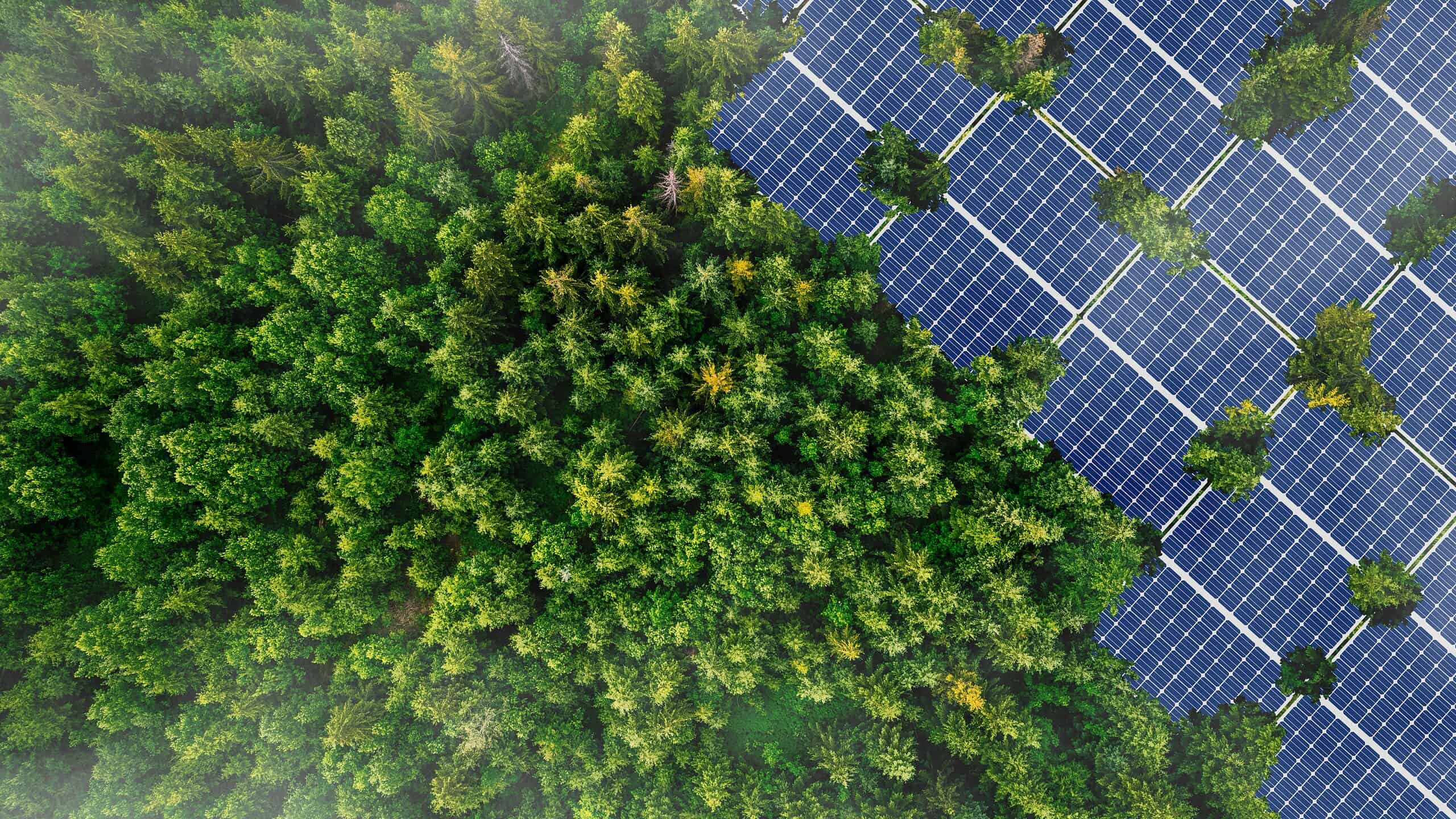

Asia-Pacific’s ESG and sustainable markets continue to expand, with banks funding circular-economy projects across the region.
In the Asia-Pacific region, the market for ESG bonds and sustainability-linked loans continues to grow. But more than that, banks have taken an increasingly active role in integrating ESG standards into their broader product portfolios—even developing transition plans for hard-to-abate sectors such as steel, aluminum, and automotive manufacturing, as well as commercial real estate.
Governments are increasingly involved. In 2025, the Monetary Authority of Singapore helped structure funds to mobilize private and public capital for green infrastructure across South Asia.
Wind power remains an area of investment, with Bank of China and Société Générale both working to fund offshore wind projects.
Stewarding the environment is important. So is improving the lives of the people who live in it. According to the Asian Development Bank, about 155 million people in developing Asia live on less than $2.15 per day, and up to 1.3 billion people across the continent live on $6.85 per day or less. Hence the importance of social bonds, which are issued to raise funds for projects with positive social outcomes. These include affordable housing, education, health care, and employment.
Among the Asia-Pacific award winners, banks seem to believe that employment generation—especially employment generated by MSMEs—can help citizens chart a path out of poverty. The Bank of the Philippine Islands and DBS have both done significant work on bonds designed to fund MSMEs.
Bank Of China
Best Bank for Green Bonds
By the end of September 2025, Bank of China had underwritten $24.1 billion of overseas green bonds, along with 322.3 billion yuan (about $46.7 billion) of domestic green bonds.
Notable activities included the bank’s work underwriting a €750 million (about $885 million) green bond issued by Iberdrola. This is the first bond to comply with both the European Green Bond Standard of the European Union and the Green Bond Principles of the ICMA.
The bond will help finance Iberdrola’s wind-power projects. In addition, the bank assisted China’s Ministry of Finance in issuing a renminbi-denominated green sovereign bond in London. This was the first green sovereign bond issued by the ministry following last year’s publication of the People’s Republic of China Sovereign Green Bond Framework.
Bank of the Philippine Islands
Best Bank for Sustainable Finance
Best Bank for Sustaining Communities
Best Bank for Sustainability Bonds
The Bank of the Philippine Islands (BPI) takes the regional Best Bank for Sustainable Finance award for a host of vital environmental initiatives. In 2025, the bank issued its largest ESG-labeled bond to date, raising roughly $690 million for its “Supporting Inclusion, Nature, and Growth” bond.
Bond proceeds are being earmarked for projects with clear environmental and social benefits, as aligned with the Green and Social Bond Principles of the International Capital Market Association (ICMA) and the Association of Southeast Asian Nations’ sustainability-bond standards. The bond has a strong social and community component.
As outlined under BPI’s sustainable-financing framework, it will help finance loans to MSMEs, notably those in underdeveloped regions. This type of financing can help improve employment opportunities in underdeveloped communities.
In addition, in 2025, BPI Capital became the domestic lead underwriter for Maynilad Water Services’ IPO. This offering carries Southeast Asia’s first “green equity” label. The financing will help Maynilad provide environmentally friendly water and wastewater services to more than 10 million people in greater Manila.
Finally, further supporting the Philippines’ transition toward clean energy, BPI has entered into a roughly $128 million project finance deal with AP Renewable Energy Corp. This loan will fund the engineering, construction, operation, and maintenance of a 221 MW peak solar power plant in Olongapo. Upon completion, the project is expected to service more than 16,000 households.
DBS Bank
Sustainable Finance Deal of the Year (Equinix Senior Unsecured Fixed-Rate Green Notes)
Best Bank for Social Bonds
Best Bank for ESG-Related Loans
DBS Bank served as joint lead underwriter and sole ESG coordinator for Bank Rakyat Indonesia’s (BRI’s) roughly $300 million social bond offering, the first social bond issued in Indonesia. BRI will use half of the bond proceeds to support job creation and reduce unemployment via SME and MSME funding. The other half will support socioeconomic development.
DBS’ work has continued in Singapore, with an estimated $395 million fixed-rate green note for Equinix Asia Financing Corporation. DBS acted as the sole green coordinator, joint global coordinator, and bookrunner for this regional deal of the year. Equinix is a provider of AI-ready data centers and digital infrastructures, operating 63 facilities across nine countries.
Proceeds will finance or refinance eligible green projects. In the field of ESG-related loans, DBS acted as one of the initial financers and as a hedge counterparty for the construction of the $430 million, 350 MW Wooreen Battery Energy Storage System.
Planned as one of the largest energy storage systems in Victoria, Australia, this facility will enhance Victoria’s energy supply reliability and support the growth of renewable energy across the state.
Commercial Bank of Ceylon
Circular Economy Commitment
A “circular economy” is a model of production and consumption designed to break typical “take-make-throw-away” patterns. Circular-economy projects champion keeping resources circulating at their highest possible value for the longest possible time.
The Commercial Bank of Ceylon provides financing for circular-economy projects, including loans to businesses transforming waste into energy or reusable materials. Particularly notable is the bank’s work in funding e-waste management projects. E-waste management entails taking no-longer-used electronics, segregating their dangerous components (lead, mercury, cadmium, and lithium batteries), and reusing components such as rare-earth metals.
The bank also finances waste segregation, recycling, and composting facilities. It employs advanced analytics tools and traceability mechanisms to evaluate resource allocation and project performance, and ensuring transparency. Route optimization efforts help make for ecofriendly supply chain management logistics.
Maybank
Best Bank for Sustainability Transparency
Best Bank for Transition/Sustainability-Linked Loans and Bonds
Maybank has done significant work in the field of sustainability-linked loans and bonds. It served as the joint sustainability structuring adviser, joint principal adviser, joint lead arranger and joint lead manager of PNB Merdeka Ventures’ approximately $1.5 billion Sustainability Merdeka Sukuk.
The sukuk will finance the construction of the triple-platinum-green certified Menara Merdeka 118 (a tower in Kuala Lumpur that will be the world’s second-tallest building). It is the first building in Malaysia to achieve triple-platinum green certification.
The bank served as sole principal adviser for the Sentral Real Estate Investment Trust’s $86 million green bond. In addition, Maybank served as sole sustainability structuring adviser, sole principal adviser, and joint lead arranger for Johor Plantations Group’s $50 million sustainability sukuk—the world’s first sustainability sukuk for the plantation sector.
Finally, the bank served as joint sustainability structuring adviser for YTL PowerSeraya’s roughly $400 million transition-finance facility. This facility will help fund the 600 MW hydrogen-ready Combined Cycle Gas Turbine, a natural-gas power plant designed to run partly or fully on hydrogen with minimal retrofitting. For information on Maybank’s transparency work, see its global award in that category.
Societe Generale
Best Bank for Sustainable Infrastructure/Project Finance
Among a host of sustainable-infrastructure projects undertaken by Societe Generale recently is the $3.1 billion financing for the Fengmiao Offshore Wind Farm, projected to generate 495 MW of power off the coast of Taiwan.
Societe Generale served as mandated lead arranger, original senior lender, and hedge provider for this deal. It is Societe Generale’s seventh offshore wind project in Taiwan.
The bank also served as mandated lead arranger for roughly $1.3 billion in financing for Zenith Energy, a leading producer of off-grid power solutions in remote areas of Australia. Funds will support the company’s pipeline of new products, while a green component will be used to construct additional renewable-power capacity.
Similar financing will fund a $107.1 million solar project in India and a wind-power facility in Japan.

No responses yet