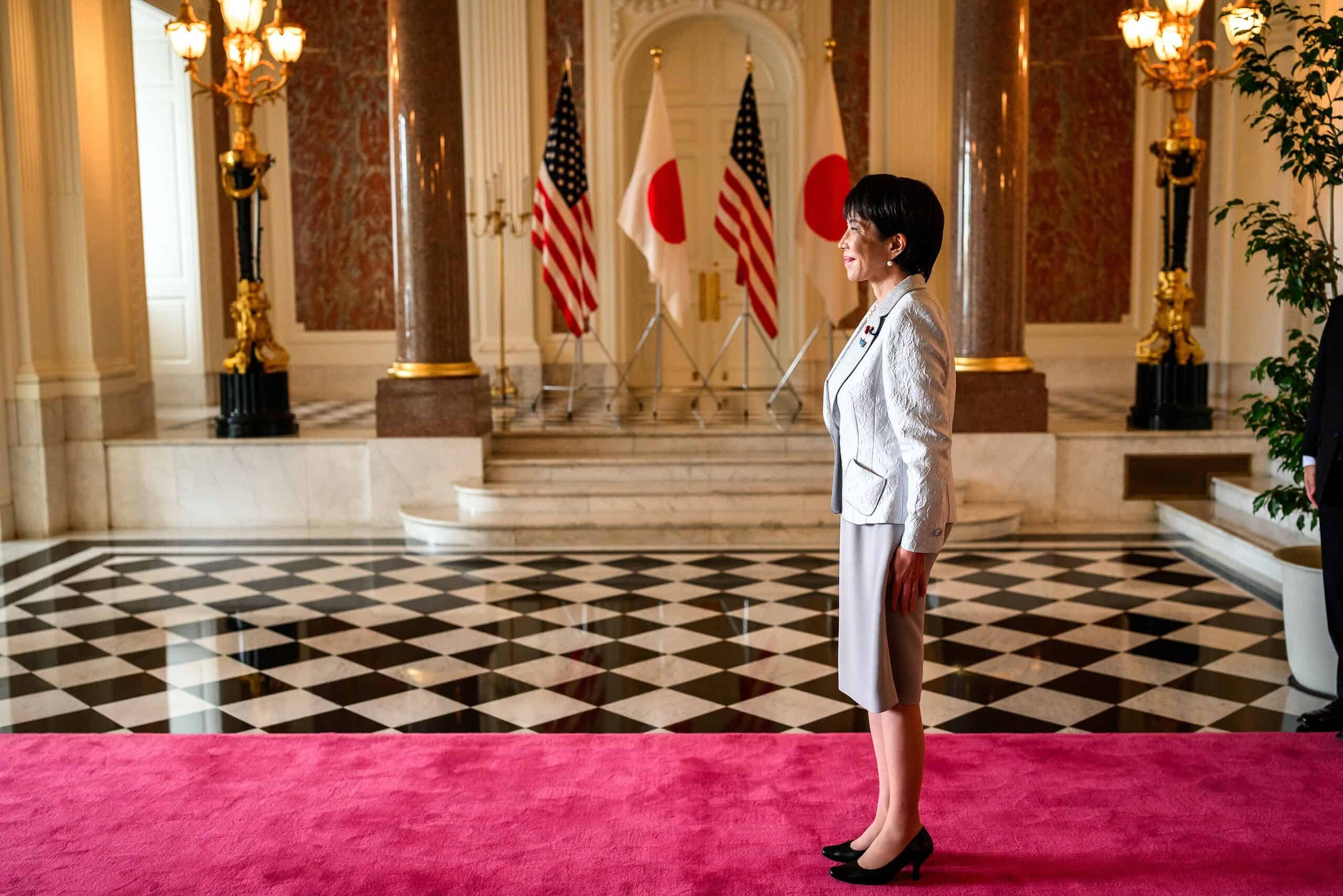
Japan faces a big turning point after conservatives secure a two-thirds parliamentary supermajority.
A decisive election outcome for Japan’s Liberal Democratic Party in early February has sparked renewed confidence among policymakers after years of leadership churn and macroeconomic pressures. Prime Minister Sanae Takaichi’s landslide victory could bring stability to what may prove a major crossroads for Japan.
Speaking to delegates at the Japan Securities Summit at London’s Mansion House a week after the election, Finance Minister Satsuki Katayama linked a range of indicators — including returning GDP growth, nominal wages rising for the third year in a row, the Nikkei 225’s 2025 close above 50,000, and record investments fueling expansion — to demonstrable corporate governance progress, describing a shift from deflationary cost-cutting to bold investment that creates a “virtuous cycle of capital that supports economic growth.”
While GDP has improved only marginally (0.1% on a quarter-over-quarter and year-over-year basis in Q4 2025, missing expectations) and real wage growth remains negative as inflation outpaces gains, the significance at this crossroads lies less in the headline numbers than in the durability implied by renewed political stability.
“Japan is back,” Hiroshi Nakaso, chairman of FinCity.Tokyo, asserted. “We have seen CPI inflation above target for 45 months in a row, leaving deflation behind us at last.”
After multiple false starts over the past two decades, Nakaso believes the shift is now structural and insists that these developments underpin genuine macroeconomic change. As deputy governor of the Bank of Japan (2013–2018), he helped steer policy and market operations through a period of profound change, so he is perhaps uniquely positioned to make that assessment.
Governance reform is central to that claim. For a market long criticized for weak capital discipline and persistent cash hoarding, 92% of Prime Market-listed companies now fully disclose marks, marking a tangible change. This shows that exchange reforms and policy pressures have succeeded in pushing boards to address return on equity and shareholder rights.
Japan’s next chapter is also taking shape against a volatile global backdrop, amid recent US trade tensions and currency volatility. In this environment, Nakaso anticipates that global investors will “continue to diversify part of their portfolios away from the US dollar into other currencies, including the yen, and into other assets” — even if dollar supremacy is unlikely to be displaced anytime soon.
A February equities briefing from Goldman Sachs provides further context. The bank says greater cooperation between Tokyo and Washington, amid concerns about China’s dominance in critical supply chains, could provide an earnings tailwind. “A reindustrialization push could create meaningful opportunities for Japanese firms in sub-sectors such as industrial robotics and factory automation,” the note stated.
Echoing policymakers’ optimism about improving domestic dynamics, Goldman highlighted a “virtuous cycle” poised to lift domestic demand-related stocks. The bank cited rising wages and sustained price growth as key tailwinds.
Japan has experienced false dawns before, but with a renewed political mandate, improving economic indicators, and structural reforms advancing in parallel, the country’s policymakers are hoping to convert signs of recovery into sustained growth.

No responses yet