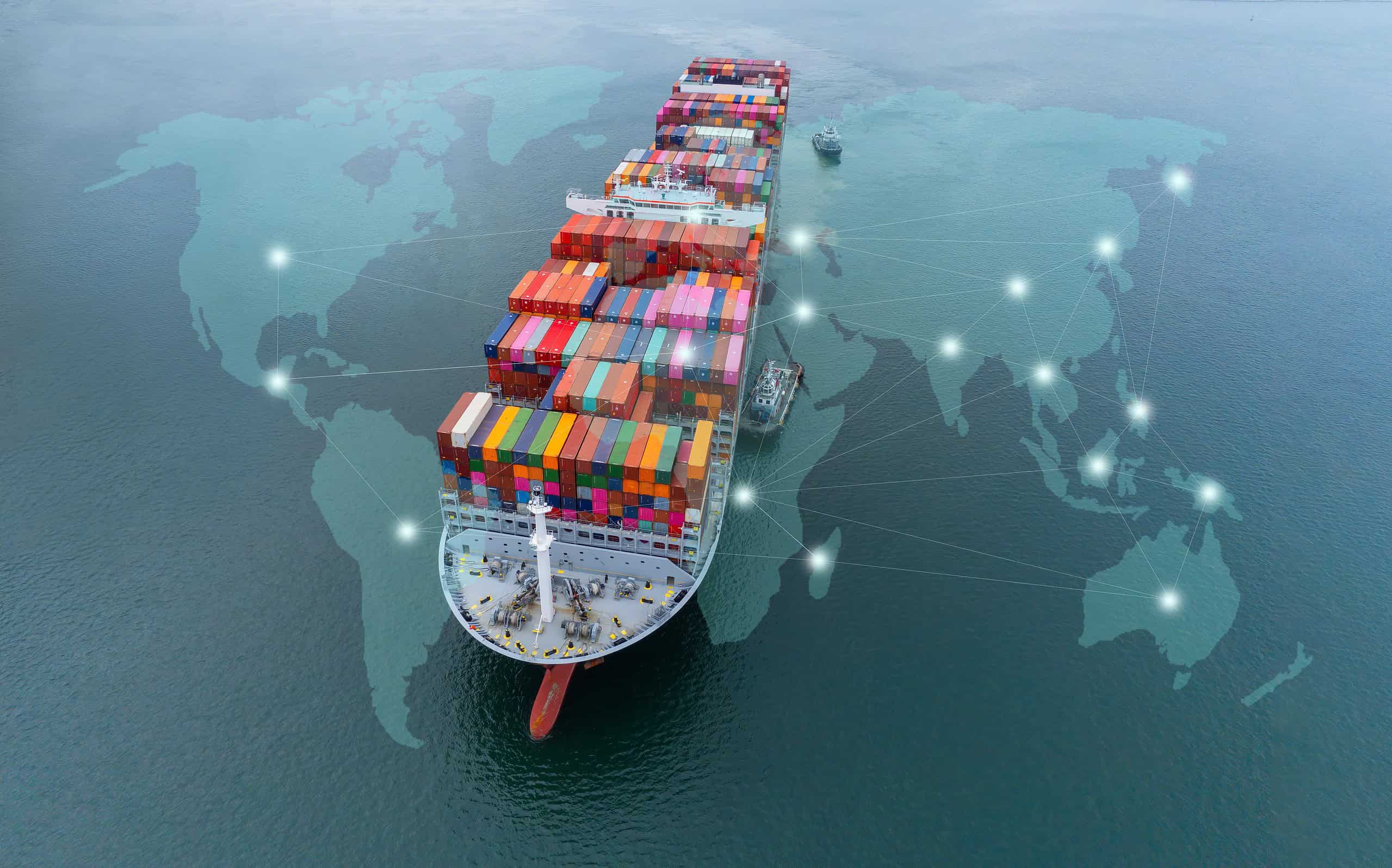
Digitalization, AI, and tokenization are the most visible changes, but sustainability and a new focus on market and segment specialization are now fundamental as well.
Trade finance is undergoing a deep, multi-faceted transformation, shifting from its historic reliance on paper and manual processes into a future dominated by digital ecosystems, AI, and new technological instruments. Defining the field today are rapid innovation, a concerted push for sustainability, and a strategic focus on connecting emerging markets to global supply chains.
The strongest near-term trend is digital transformation and automation, whereby institutions are going “digital to the core” to eradicate paper-heavy tasks and eliminate centuries-old bottlenecks.
Initiatives like DBS Bank’s DBS DigiDocs, which reduces document processing time, and UniCredit’s harmonization of core processes across 18 countries, underscore a global commitment to operational efficiency. Software providers like CGI, with its Trade360 SaaS platform, and Surecomp, with its trade finance-as-a-service (TFaaS) solution, are building core interoperable, cloud-based infrastructure that allows multiple banks to share investments and streamline back-office operations.
Building on digitization, AI integration is becoming central to competitive advantage. Banks like DBS are leveraging sophisticated AI intelligence layers to power real-time credit approval and complex internal processes, including data-driven account planning and generative AI systems for automating intricate operational tasks. Standard Chartered is piloting an AI engine for augmented document checking, focused on helping clients detect and fix discrepancies before submission, while Surecomp offers AI-powered text validation for bank guarantees and letters of credit. Innovations such as these are dramatically increasing operational speed and accuracy while mitigating risk.
In parallel, blockchain and tokenization are rewiring even the most traditional trade instruments, promising a future in which they are secure, digital, and self-executing. Citi’s pilot Citi Token Services for Trade aims to replace traditional bank guarantees and letters of credit, utilizing tokenized deposits held in a smart contract where the payment is programmable. Once verified trade data, such as a shipping confirmation, is fed into the system, the smart contract instantly triggers the release of funds, providing near-instant liquidity and eliminating long settlement delays associated with manual document verification.
Beyond Tech
The transformation of trade finance is not only technological. Sustainable finance, as a component of ESG strategies, is now a fundamental element of trade strategy. While the initial rapid momentum toward sustainable trade finance is encountering practical, geopolitical, and economic challenges, major institutions are maintaining significant, long-term commitments.
Societe Generale is aiming for €500 billion in sustainable trade finance by 2030, offering instruments such as green bank guarantees and sustainability-linked facilities. Standard Chartered has established a regularly updated Transition Finance Framework, which guides clients toward a low-carbon economic model and sets specific, tailored expectations for emerging markets—where sustainable finance is growing fastest—to ensure trade finance aligns with global climate and social objectives.
The future of trade finance is also likely to reflect a specialized focus on key markets and segments.
DBS supports small and midsized enterprises with solutions focused on supply chain resilience and financing access. Ecobank acts as a pan-African bridge, managing risk across 33 countries alongside its Structured Trade & Commodity Finance service while Alteia Fund facilitates Middle East-Sub-Saharan Africa trade. Banks are also leveraging specific regional corridors, including Santander (Europe-Latin America), Raiffeisen Bank International (Central and Eastern Europe), and DBS, which supports China +1 business strategies across Asia-Pacific.
While rapid, tech-driven evolution—accelerating from paper to digital, from manual processes to AI automation, and from traditional instruments to tokenized, programmable contracts—is the most dramatic facet of the transformation of trade finance, it is not the only one. By integrating sustainability and strengthening regional expertise, the industry is going beyond optimization to build a more efficient, inclusive, and globally connected future.
Methodology
Global Finance editors select the winners of the Trade Finance Awards and Supply Chain Finance Awards with input from industry analysts, corporate executives, and technology experts. The editors consider entries as well as independent research, including both objective and subjective factors. It is not necessary to enter to win, but the additional information in an entry can increase the chance of success. This year’s ratings, which cover eight regions and approximately 100 countries, territories, and districts, were based on performance from the fourth quarter of 2024 through the third quarter of 2025. Global Finance uses a proprietary algorithm that incorporates criteria such as knowledge of customer needs, financial strength and safety, strategic relationships, capital investment, and innovation. The algorithm incorporates these ratings into a single numeric score, with 100 equivalent to perfection. When more than one institution earns the same score, we favor local over global providers and those privately over government owned.
Meet The Winners






No responses yet