

When your pet is hurting, your priority is their well-being — not the vet bill that may follow. But emergency veterinary care gets expensive fast, with costs that can easily climb into the thousands.
Whether your pet has a broken leg or is undergoing treatment for cancer, pet insurance can reduce the financial strain, reimbursing you for a significant portion of those unexpected expenses.
Here’s what to know.
Key Takeaways
- Pet insurance typically covers between 50% to 90% of eligible veterinary expenses (minus the deductible).
- Visiting an emergency veterinarian can cost $100 or more just for the exam, before your pet is even diagnosed.
- Coverage depends on your plan type, reimbursement percentage and deductible.
- The cost savings for pet owners can be significant.
What is the average vet bill in the U.S.?
According to Healthy Paws pet insurance, the average emergency veterinary bill if your pet swallows a sock, gets an ear infection or breaks a leg can range from $1,500 to $5,500.
If your pet needs emergency care, you’ll likely have to pay a higher-than-usual rate to see a veterinarian in a timely manner; emergency vet visits tend to cost more than routine visits since these facilities stay open 24/7 and require specialized staff and equipment. If your pet has a traumatic injury, respiratory distress or ingested something they shouldn’t have, you’ll likely pay for diagnostics like bloodwork or X-rays, followed by a treatment plan. Depending on the issue, your bill could run well into the thousands.
Pet insurance can help offset these costs by covering all or a portion of emergency-related expenses, including diagnostic tests, hospitalizations, surgery, anesthesia and prescription medications.
Common veterinary emergencies for cats
Cats are usually less expensive to insure than dogs, and their treatments tend to be less expensive, too. However, vet visits can still be pricey. According to the North American Pet Health Insurance Association (NAPHIA), some of the most common claims for cats include:
- Gastrointestinal issues
- Dental diseases
- Diabetes
- Skin conditions
- Arthritis
Depending on the condition and the treatment needed, you could pay anywhere from $500 to $10,000 or more. Per NAPHIA’s most recent State of the Industry Report, the most expensive cat insurance claim in 2025 was for a domestic shorthair with a lung condition. Fortunately for the cat (and its owner) the pet’s insurance policy paid a staggering $99,416 in vet expenses.
Common veterinary emergencies for dogs
For dogs, emergency vet visits are often for unexpected injuries, but hereditary or congenital issues can cause significant problems. According to NAPHIA, the most common insurance claims for dogs were for the following health issues:
- Gastrointestinal issues and foreign object ingestion
- Broken bones
- Ear infections
- Allergies
- Skin conditions
- Growths or masses
The largest insurance claim reported by NAPHIA in 2025 was for a large, mixed-breed dog in Washington. The pet received treatment for lymphoma, and insurance paid out $65,889 in eligible veterinary costs.
How much of the average vet bill does pet insurance cover?
How much your insurance policy will cover depends on several factors:
- Your reimbursement percentage: When you purchase pet insurance, you select a reimbursement percentage. This percentage is how much of your bill the insurer will cover. In general, you can choose a percentage between 50% and 90%.
- Your deductible: The deductible is the amount of your pet’s treatment you have to cover before your insurer helps with the cost. The deductible is usually between $250 and $1,000.
- Annual or lifetime limits: Some insurers have annual or lifetime treatment limits. If your pet’s treatment exceeds that amount, you’re responsible for any additional costs.
- Treatment plan: Pet insurance only covers approved procedures performed by a licensed veterinarian. Experimental procedures and medications are typically excluded.
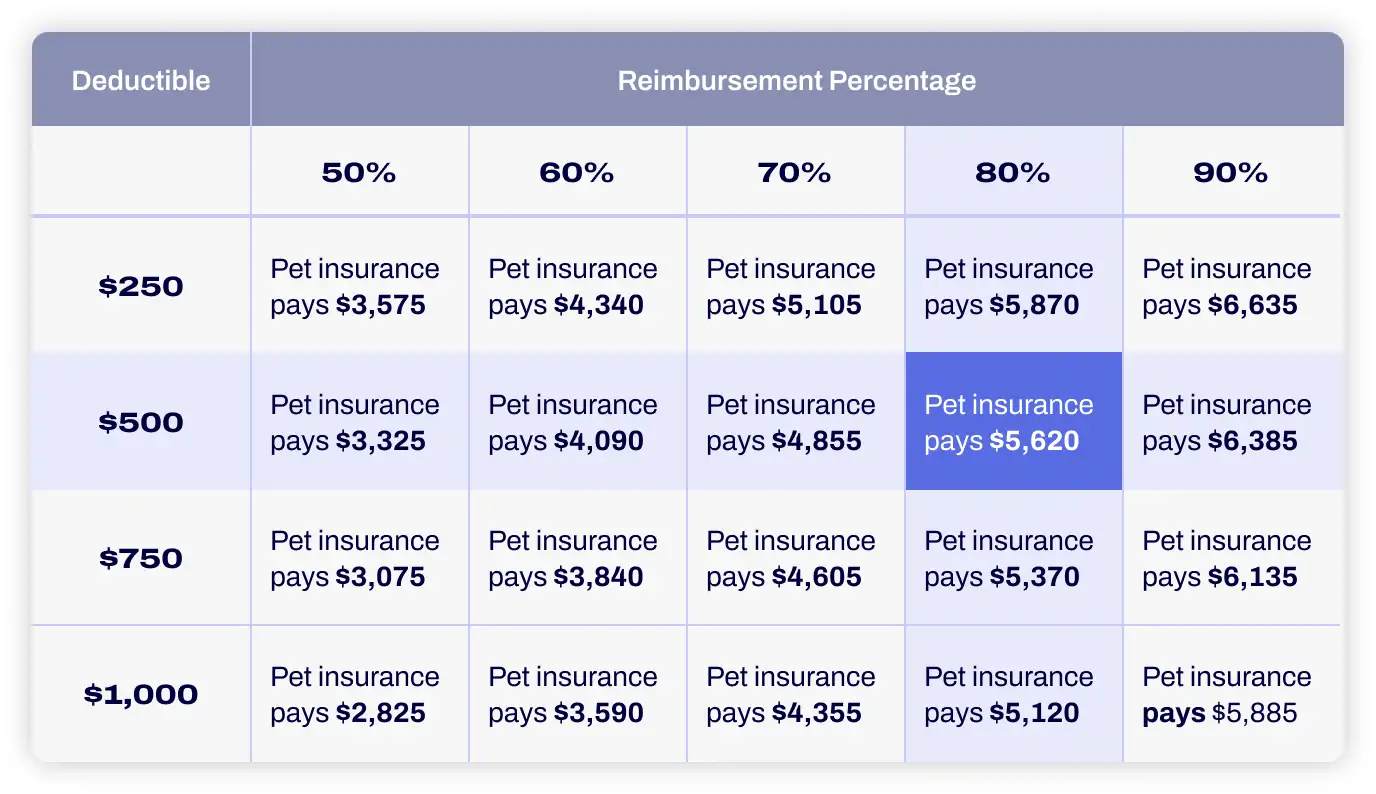
Consider this example: Say you own a five-year-old German Shepherd who needs treatment for hip dysplasia, and your vet quotes you $7,650 for a total hip replacement. The table below breaks down insurance payouts at different reimbursement percentages and deductible levels.
With an accident and illness policy with 80% reimbursement and a $500 deductible, you’d get back over $5,600.
It’s important to know that while pet insurance can help with unexpected medical costs, most standard policies don’t cover routine or preventative care (like yearly checkups) unless you add optional wellness coverage.
Pet insurance also doesn’t cover pre-existing conditions or health issues that are diagnosed during the policy waiting period, so any care related to those problems won’t be reimbursed.
What reimbursement percentage and deductible should I choose?
Your selected reimbursement percentage and deductible play a big role in determining how much of your vet bills pet insurance will cover. Most insurers don’t allow you to change these terms unless you cancel and re-enroll, which can trigger new waiting periods pre-existing condition exclusions.
As you shop for a plan, ask yourself:
- How much can I afford each month? Review your monthly cash flow and determine how much you can comfortably afford to spend on insurance premiums.
- How much do I have in savings? Deductibles can range between $250 and $1,000. A higher deductible will give you a lower monthly premium, but you’ll have to cover more of the upfront treatment costs yourself. If you have savings set aside, that trade-off may be worth it.
- How likely is it that my pet will need treatment? Some dog and cat breeds, like French Bulldogs or Maine Coons, are prone to chronic health issues. If your pet’s breed or medical history puts them at higher risk, opting for a higher reimbursement rate plan can save you money in the long run.
How Much of Vet Bills Does Pet Insurance Cover FAQ
Does pet insurance cover 100% of vet bills?
No, pet insurance plans do not cover 100% of vet bills. A pet insurance policy will only cover a percentage of eligible treatments for accidents and illnesses after you pay your deductible. They don’t cover wellness or preventative care like vaccinations, spaying, neutering, or checkups.
Does pet insurance cover emergency vet visits?
Pet insurance companies rarely cover the cost of emergency vet exam fees, but it will cover the cost of diagnostics like X-rays or bloodwork and treatments.
What percent of the vet bill does pet insurance cover?
Depending on the reimbursement percentage you choose, pet insurance can cover anywhere from 50% to 90% of your eligible veterinary expenses, minus your deductible.
How much does pet insurance cost?
On average, dog insurance costs $62 per month for accident and illness coverage, while cat insurance costs an average of $32 per month, according to NAPHIA. However, your pet insurance premiums depend on several factors, including your location, pet’s breed, and your pet’s age.
Summary of Money’s How Much of Vet Bills Does Insurance Cover?
A standard pet insurance policy reimburses you between 50% to 90% of eligible vet expenses, minus the deductible. How much you save depends on the type of policy you choose, reimbursement percentage, deductible, and any coverage limits unique to your policy.
With emergency vet exams starting around $100, and treatments for issues like infections, broken bones or swallowed objects often running into the thousands, pet insurance can make a real difference when your pet needs urgent care.
More from Money:
What Does Pet Insurance Cover?
How Much is an Emergency Vet Visit?
Renters Insurance vs. Pet Insurance: What’s Covered and What’s Not

No responses yet